What Roblox Badges Can You Get: Practical Guide for Players
Discover which Roblox badges you can earn, how to unlock them, and what they reveal about your progress. Covers official badges, event rewards, and tips.


You can earn a broad range of Roblox badges—from official game milestones to event-specific rewards and developer-created achievements. Badges appear on your profile to mark completed tasks, milestones, or participation in events, and they span simple participation to rare, time-limited accolades. While badges don’t affect currency, they signal skill, persistence, and exploration across thousands of games, encouraging ongoing play and discovery.
What Roblox badges are and how they fit into your profile
In Roblox, badges are achievement markers that appear on your profile and in game pages, signaling that you completed tasks, reached milestones, or participated in events. If you ask what roblox badges can you get, the answer is broad: badges come from official game publishers, events, and developer-created milestones. According to Blox Help, badges provide a visible record of progress and can motivate continued play across thousands of games. As you explore, you'll notice badges labeled as Official, Event, or Developer-Created, each with its own unlock path and display location on your profile.
Official badges are typically tied to core gameplay tasks defined by the game creator. Event badges are time-limited rewards available during a live event or promotion and can encourage players to log in during a specific window. Developer-Created badges are unique to individual experiences and may follow unusual or creative criteria; some games treat them as collectibles, others as milestones for exploration or skill checks. Your Roblox profile collects these badges under a central Badges tab, making it easy to scan what you’ve earned and what still awaits you. This system supports players who enjoy strategy planning, as you can map out which badges align with the games you already love or want to try.
In practice, badge hunting can become a driver for discovering new titles. Players often discover new games by chasing a badge checklist, or they may chase badges in games with high-quality design, storytelling, or unusually clever tasks. The Blox Help team has found that well-designed badges not only reward effort but also encourage players to revisit a title to see if there’s a hidden requirement they missed previously. Keep in mind that badge visibility and accessibility can vary widely from one game to another; some developers offer partial badge progress, while others unlock everything only after a single challenging task.
Official badges vs. event badges: key differences
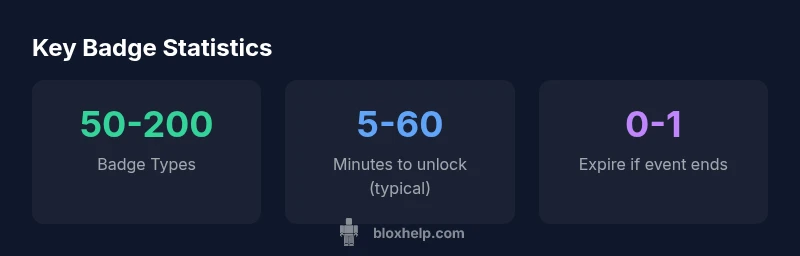
Official badges are published by the primary game creator and are typically tied to core objectives—completing a main quest, reaching a specific score, or finishing a pivotal area. They are usually permanent and remain visible on the badge list unless the game changes. Event badges, by contrast, are time-bound rewards tied to seasonal events, limited promotions, or partnerships with Roblox or third-party developers. These badges often have stricter deadlines, and some may disappear after the event ends, making timely participation crucial.
For players, this distinction matters because it shapes strategy. Official badges reward steady gameplay across a title, while event badges can offer rarer looks into a game’s ecosystem and often encourage players to participate at specific times. Developer-created badges add another layer of variety, appearing in individual games with unique criteria—some quirkier or more exploratory than the standard paths. When planning badge hunts, prioritize games with clear, well-documented badge criteria and consistent badge support.
How to earn common badge categories
If you’re wondering how to approach earning badges efficiently, start with a plan. First, open the badge page or the game’s description to list all available badges. Then.
- Identify the required tasks or milestones for each badge. Some badges require straightforward tasks (completing a level, collecting items), while others demand more complex actions (solving puzzles, beating a boss, or reaching a high score).
- Prioritize official badges from titles you actually enjoy; they tend to be more reliable and easier to track across updates.
- For event badges, mark the event dates on your calendar and set reminders to participate before the deadline.
- In developer-created badge scenarios, read the developer’s notes or community posts to understand nuanced requirements.
A practical approach is to maintain a simple checklist per game: badge name, unlock method, deadline (if any), and your current progress. This helps you avoid missing easy badges while balancing time and in-game exploration. The more you play, the more you’ll see how some titles emphasize social features, collaborative tasks, or puzzle-solving, which translates into richer badge lines and longer-term engagement.
Limited-time and rare badges: tips to increase odds
Rare badges often reward persistent participation and careful monitoring of events. To improve your odds, follow these strategies:
- Stay updated on official Roblox channels and game pages for event announcements and badge criteria changes.
- Participate in multiple events if possible; even if one badge has a tight window, others may open later with comparable value.
- Join the game’s social spaces, like in-game groups or official Discord channels, to hear timely tips and avoid missing deadlines.
- Prioritize games with documented badge paths and consistent event support; if a badge is particularly elusive, check community guides for proven strategies.
- Maintain a personal badge log so you can track which badges you’ve earned and which are still on the radar.
However, beware of scams or dubious sites promising exclusive badges. Stick to official game pages, Roblox-supported events, and trusted community sources to prevent losing time or compromising your account.
Badges for developers: how badges influence game design
Badge systems are not just decorations; they influence how players interact with a title. For developers, badges can serve as milestones that guide players through a designed experience, encourage exploration, and reward mastery. Well-balanced badges create a sense of progression without locking content behind paywalls. As a player, you benefit when developers design badges with clear, attainable criteria and transparent unlock conditions. When you encounter a game with thoughtful badge design, you’re more likely to keep returning, try different paths, and engage with the game’s broader features.
From a design perspective, badge catalogs can help developers test engagement loops, track player flow, and highlight hidden content. If you’re exploring Roblox Studio or planning your own badge-based progression, consider starting with a small set of badges that map to core gameplay loops and gradually expand to more exploratory or community-driven goals.
Best practices for tracking and showcasing your badge collection
A practical badge-tracking routine helps you stay organized and maximize your time in Roblox. Try these steps:
- Use the in-game Badges tab to monitor earned vs. unearned badges across each title you play.
- Create a simple log (digital or paper) with badge names, unlocking criteria, and date earned. This makes it easy to review your progress and set targets for the next session.
- Group badges by game and category to identify which genres are most rewarding for you and where you should focus future play.
- Share achievements selectively; consider privacy and audience when posting your badge collection in communities or social feeds.
- Periodically reassess your badge goals to align with titles you’re genuinely enjoying, rather than chasing a numeric quota.
For power users, integrating a lightweight tracker (like a sheet or notes app) can help you visualize your progress across dozens of titles and events. The goal is to create a feedback loop: badge earn → reflection → new goals → renewed exploration.
Common myths and practical takeaways
There are several myths around Roblox badges that can mislead new players. Do badges affect Robux or ranking? Generally, badges do not grant in-game currency or alter a player’s standing in Roblox’s core ranking systems. Can you lose a badge? Most earned badges remain on your profile, though some event badges may expire or be removed after a period. Are badges equally accessible to all players? Accessibility varies by game; some badges are open to all, others require specific conditions or participation in events. Realistically, badges should be viewed as a personal milestone system that tracks your journey through different games and events. A practical takeaway is to treat badges as optional but satisfying checks that reflect your engagement and curiosity across the Roblox ecosystem. Embrace badges as guides to explore new titles, not as currency or gatekeeping tools.
Wrapping up: The roadmap to mastering Roblox badges
To get the most from badges, adopt a methodical approach: identify games with strong badge ecosystems, track progress in a simple log, and plan regular sessions to chase both official and event rewards. Where possible, choose titles you enjoy; the badge journey should feel rewarding, not exhausting. Remember that badge value lies in your personal growth and discovery—each badge marks a new facet of your Roblox journey. The more you engage with varied games, the richer your badge collection becomes, and the more you’ll understand how to leverage badges for future explorations.
Badge categories in Roblox
| Badge Type | What it Represents | Typical Unlock Method | Notes |
|---|---|---|---|
| Official Badges | Earned by completing in-game tasks defined by the developer | Complete required objectives or reach milestones | Permanent in most titles; visible on badge page |
| Event Badges | Time-limited rewards tied to events or promotions | Participate within event window and complete tasks | May disappear after event ends; plan ahead |
| Developer-Created Badges | Custom milestones unique to a game | Meet criteria defined by the game developer | Varies widely by game; may be quirky or creative |
Questions & Answers
What counts as a Roblox badge?
Badges are achievement markers awarded by game developers for completing tasks or milestones. They appear on your profile and in-game badge pages. Requirements vary by game.
Badges mark completed tasks and milestones and show up on your profile.
Do badges affect Robux or player ranking?
In most cases, badges do not grant Robux or alter core player rankings. They are a cosmetic and progress-tracking feature within individual games.
Badges don’t give Robux or change your overall Roblox rank.
Can badges expire or be removed?
Some event badges are time-limited and may disappear after the event ends. Official and developer-created badges typically remain on your profile unless a game updates its badge system.
Event badges can expire; others usually stay on your profile.
Are there badges accessible to all players?
Accessibility depends on the game. Most official badges are obtainable by playing the title, but some events or special tasks are limited to certain regions or participation criteria.
Most badges are obtainable, but some are limited by event or game rules.
How can I see all my badges in one place?
Open your profile and navigate to the Badges tab to view earned badges across games. Some games also offer a dedicated page listing all related badges.
Open your profile and check the Badges tab to view your collection.
“Badge systems are a powerful, flexible way to guide players through content and celebrate milestones across Roblox games.”
The Essentials
- Check badge tab for each game to see unlock paths
- Event badges are time-limited—plan ahead
- Track progress with a simple badge log
- Badges reflect play history, not currency or rank