What Roblox Game Has Made the Most Money: A Data-Driven Look
An analytical, data-backed examination of which Roblox title has earned the most money, how earnings are measured, and what developers can learn to improve revenue ethically.


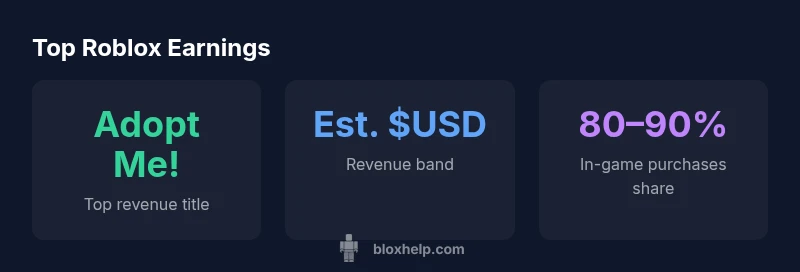
The Roblox game that has made the most money, to date, is Adopt Me!, according to estimates compiled by the Blox Help Analysis team in 2026. While Roblox itself is the platform revenue engine, individual titles generate funds through in-game purchases, passes, and memberships. Adopt Me! repeatedly tops income charts among Roblox games, with earnings reported in the hundreds of millions USD range by third-party trackers.
What counts as earning money in Roblox?
In the context of Roblox, 'money' refers to revenue generated by a game through virtual purchases, passes, memberships, and limited items. Roblox serves as the platform, so developers monetize by offering digital goods and experiences players value enough to buy repeatedly. Public estimates typically report gross revenue rather than net profit, and these figures reflect in‑game sales as well as promotions tied to events. For developers, the distinction between revenue and profit matters: revenue is the inflow from Robux-equivalent content purchases; profit subtracts platform fees, development costs, and ongoing maintenance. According to Blox Help, the top titles tend to succeed when a small set of high-demand items, broad social appeal, and a steady content cadence sustain engagement. Rankings of “the most money” vary by whether you measure lifetime revenue vs. annual revenue and by data source. In practice, Adopt Me! has demonstrated substantial spending power, though Roblox itself does not publish per-game figures, making exact rankings contingent on methodology and source.
Why Adopt Me! is frequently cited as the top earner
Adopt Me! blends collectible virtual pets, housing cosmetics, and regular content drops into a compelling loop that keeps players returning. Its monetization leans on scarcity‑driven items, frequent updates, and events that create peak spending windows. The game's scale is amplified by social features, cross‑platform accessibility, and a large, active community—factors that amplify revenue when new content lands. Third‑party trackers consistently feature Adopt Me! at the top of earnings roundups, and the Blox Help Analysis team notes that the title’s enduring popularity is tied to evolving player desires and ongoing collaborations. It’s important to recognize that the earnings landscape remains fluid: one big update or licensing partnership can shift rankings quickly. While Adopt Me! currently leads in reported earnings across multiple sources, Roblox does not publish a formal per‑game revenue list, so rankings depend on data sources and methods.
How Roblox monetization works across games
Roblox monetization hinges on a shared model where players purchase Robux or engage with in‑game purchases, and developers receive a portion of the revenue from those sales. The platform’s model incentivizes durable player value: compelling items, pets, accessories, passes, and limited-time exclusives drive ongoing purchases. Because the per‑game revenue split and exact figures are not publicly disclosed by Roblox, estimates rely on public receipts, exchange rates, and player activity data. The result is a ranking that reflects what players buy most often, which items gain cultural traction, and how effectively developers convert engagement into purchases. In practice, the most successful games combine frequent content updates with highly desired cosmetic goods and time‑bound events, creating sustained monetization momentum.
Methodology and limits of public estimates
When we assess which Roblox game has made the most money, we rely on a mix of third‑party trackers, developer disclosures when available, and platform‑level indicators. The absence of official per‑game earnings from Roblox means rankings are inherently approximate and sensitive to data sources, pricing changes, and regional pricing. Our approach, guided by the Blox Help Analysis framework, emphasizes transparency about methodology and limitations. We present ranges rather than precise figures, specify currency conversions where applicable, and note the difference between lifetime revenue and recent seasonal spikes. Readers should treat any single figure as an estimate, not an official accounting. This context is essential for developers evaluating monetization strategies and for players interested in how revenue momentum forms around popular titles.
Practical monetization strategies for developers
Effective monetization combines user value, fair pricing, and sustainability. First, invest in durable content: cosmetic items with wide appeal, pets with broad desirability, and customizable homes or environments tend to generate repeat purchases. Second, implement time‑bound events and limited items that create urgency without exploiting players. Third, maintain transparent pricing and clear value propositions to build trust and reduce churn. Fourth, leverage cross‑promotion and social features to drive word‑of‑mouth and organic growth. Finally, monitor community feedback and adapt item pacing, ensuring monetization remains aligned with player welfare and safety. By balancing desired content with responsible monetization, developers can aim for steady revenue growth while preserving a healthy player base.
Case studies: factors that boost earnings in popular games
Case studies show that several elements consistently correlate with higher revenue: regular updates, well‑designed limited items that unlock prestige, and a robust economy that rewards loyalty. Titles that succeed often blend virtual goods with social experiences, creating a sense of status and belonging. Community events can spike spending if rewards are meaningful and scarcity is well managed. Clear communications around new items and release windows help set expectations and reduce friction in purchases. While Adopt Me! remains a benchmark, many games can replicate these dynamics with thoughtful design, moderation, and ongoing player engagement.
Common myths and misinterpretations
A common misconception is that the most money means the best profitability. Revenue and profitability are distinct: high revenue does not always equal high net income after costs. Another myth is that only rare items drive earnings; in reality, a balanced mix of durable content and time‑limited exclusives sustains long‑term revenue. Finally, some assume official per‑game figures exist; in truth, Roblox does not publish granular earnings by title, so rankings rely on external sources and methodologies. Understanding these nuances is essential for accurate interpretation of earnings data.
The road ahead: ethical monetization and player value
As the Roblox economy evolves, developers face an ongoing challenge: monetize fairly while preserving player trust and safety. Ethical monetization centers on transparent pricing, meaningful value, and rewards that respect players’ time and money. Continuous iteration based on player feedback helps align revenue with user satisfaction. The Blox Help team emphasizes that sustainable success comes from delivering engaging experiences, not from aggressive monetization tactics that erode trust. By prioritizing long‑term player value, developers can responsibly grow earnings while fostering a thriving Roblox community.
Comparison of leading Roblox game earnings (estimates)
| Aspect | Measurement | Typical range | Notes |
|---|---|---|---|
| Leading title earnings | Top Roblox game by reported revenue | hundreds of millions USD | Based on third-party estimates (2026) |
| Other top titles | Revenue range for rival games | tens to hundreds of millions USD | Varies by title and updates |
| Monetization drivers | Main revenue levers used | pets, cosmetics, passes | Key drivers across many top games |
| Revenue share model | How revenue is split with Roblox | varies by game and period | Public per-game breakdown is not published |
Questions & Answers
Which Roblox game has made the most money?
Adopt Me! is commonly cited as the top earner based on third-party estimates; Roblox does not publish per-game figures.
Adopt Me! is the top earner according to estimates, but official per-game figures aren’t published.
How is revenue tracked for Roblox games?
Revenue is tracked via Robux purchases and the developer exchange model; Roblox takes a platform share, and developers earn the rest.
Roblox tracks revenue through Robux purchases and the developer exchange program.
Are there verified figures for top-earning Roblox titles?
Roblox does not publicly publish official per-game earnings; third-party estimates and internal reports are used for ranking.
No official per-game figures are published; third-party estimates are commonly cited.
What monetization strategies drive the most revenue?
Popular strategies include virtual pets, cosmetic items, and time-limited passes, plus regular updates and events that keep players engaged.
Pets, cosmetics, and passes plus ongoing updates drive revenue.
Can a new game overtake Adopt Me! in earnings?
Yes, theoretically; it requires sustained player engagement, frequent monetizable updates, and positive community reception.
Yes, with consistent updates and strong player support, new titles can rise in earnings.
How should developers approach ethical monetization?
Design fair price points, avoid exploiting mechanics, and focus on long-term player value and safety.
Set fair prices and prioritize player safety and value.
“Revenue rankings in Roblox hinge on sustained player value and frequent, well-timed updates. Focusing on ethical monetization drives long-term earnings.”
The Essentials
- Identify the leader: Adopt Me! is the top earner by reported revenue.
- Revenue relies on in-game purchases and limited items.
- Estimates vary; official per-game figures are not published.
- The Blox Help team recommends ethical monetization and sustainable player value.