How to Make Clothes on Roblox: A Practical Guide
A comprehensive step-by-step guide to designing, texturing, and uploading clothes for Roblox avatars. Learn templates, best practices, and safety tips for beginners.


Learn how to make clothes on roblox by designing textures for shirts and pants, then uploading them to your avatar. This guide covers templates, basic image editing, and step-by-step publishing, plus safety tips to keep content compliant. You’ll create original textures, test them in-game, and refine your designs before sharing with the Roblox community. No coding required—just creativity and a valid Roblox account.
Understanding Roblox clothing and why creators start here
In Roblox, clothing items like shirts and pants determine how your avatar looks in-game. When you learn how to make clothes on roblox, you're designing textures that map onto the 3D body, then uploading those textures as wearable items. The process blends art and basic asset management rather than coding, making it approachable for beginners. Start by exploring the official templates Roblox provides; they show exactly where your artwork will sit on the torso and limbs. As you gain confidence, you’ll build a small portfolio of original designs that showcase your style and technical understanding of texture wrapping. This guide uses the phrase "how to make clothes on roblox" to anchor your learning and ensure your designs align with Roblox's avatar system. You’ll also learn how templates affect alignment, how to keep edges clean, and how to test your textures before publishing. By the end, you’ll feel confident turning rough sketches into wearable apparel for Roblox avatars.
The Roblox clothing ecosystem: shirts, pants, and templates
Roblox clothing comes in several types, with shirts for the torso and pants for the legs and hips. The templates Roblox publishes show where your design sits on the flat texture so that when wrapped around the 3D model, the patterns line up with seams. When you ask how to make clothes on roblox, you’re really learning how to translate 2D art into 3D clothing that sits correctly on a standard avatar. Templates include color guides and alignment marks to help you place details like logos, stripes, or gradients. Keep in mind that every uploaded item must be original or properly licensed, and content policies apply. If you plan to sell or publish, you’ll need to provide a clear product name and description, and adhere to Roblox's guidelines. Over time, you may experiment with variations like T-shirts, hoodies, or customized pants to expand your catalog. The result is a personal collection that reflects your creative voice while staying within the Roblox ecosystem.
Tools and materials you’ll need to get started
Before you start designing, gather a few essentials. A Roblox account is mandatory to upload clothing items. You’ll also need a computer or tablet with internet access and an image editor capable of exporting PNG files. Use the official shirts and pants templates provided by Roblox to ensure your textures map correctly to the avatar. Optional but helpful: a simple mood board or sketches to guide your design, and a reference avatar to preview how textures wrap around the model. While you can work with free tools, investing in a reliable editor can improve edge sharpness and color accuracy. Remember to save your work frequently and keep backups of your texture assets.
Preparing your designs: concept to template mapping
Effective clothing starts with a solid concept. Begin with a theme or color palette and sketch how it will appear on the torso and legs. Open the official shirt template and plan where highlights, shadows, and logos will sit. Map your 2D artwork to the template so that the main focal points align with the avatar’s seams and joints. This planning phase helps prevent misalignment during wrap-around and reduces back-and-forth edits later. If you’re unsure, test a simple geometric pattern first to understand how the texture wraps and where the seams land on the model. Keeping your concept clear from the outset saves time and yields a more polished final product.
Design shirts: texture creation step-by-step
Start with the shirt template, and block in base colors before adding details. Layer textures to separate shading, patterns, and logos, ensuring you keep clean edges along the template borders. Use guides to align chest areas, sleeves, and shoulder seams. Regularly compare the 2D texture to a 3D preview of the avatar to catch alignment issues early. Export the shirt texture as a PNG with transparency where needed and name the file clearly (e.g., "Shirt_YourTheme.png"). Pro tip: work in small iterations and keep a version history so you can revert if a design looks off in-game.
Design pants: texture creation step-by-step
Apply the same disciplined approach to pants: establish a base color, add secondary colors for seams or stripes, and place decorative elements within the template’s leg areas. Use symmetry if your design benefits from mirrored patterns to save time. Continuously verify how the texture aligns with the leg geometry in a live preview. Save multiple iterations and keep a clean naming convention that includes the project name and whether it’s a shirt or pants texture. When you’re satisfied, export the PNGs with transparent accents where appropriate and prepare for upload.
Upload textures as clothing assets on Roblox
To publish, go to Roblox Creator or the Clothing section of your account dashboard and select the appropriate asset type (Shirt or Pants). Upload the PNG texture you created, then fill out the asset's name, description, and tags. Your design must be original or properly licensed, and you should ensure it adheres to Roblox’s content guidelines to avoid takedowns. After uploading, Roblox may process the asset; this is routine and may take a moment. Once approved (or available for testing, depending on the platform), you can assign the item to your avatar or share it with others as a wearable. Keep an eye on moderation notices and be prepared to make adjustments if your design is flagged.
Upload process for pants and final publish steps
Repeat the above upload steps for pants, making sure you select the correct asset type. Double-check that the theme, color accuracy, and any logos align with the template's orientation. Once both shirt and pants are uploaded, you can test them together on your avatar to ensure consistency across the outfit. If everything looks good, publish the set and consider releasing it as a coordinated outfit or bundle to maximize visibility. Ongoing tweaks and new colorways are common as you gain experience and understand how players interact with your designs.
Testing, refinement, and feedback loops
Testing is a critical phase. Wear your new clothing on your avatar and watch how colors shift under different lighting in-game. Look for edge artifacts, mismatched seams, or color bleeding where the texture wraps. Gather feedback from friends or the Roblox community and note recurring issues. Return to your editor to adjust textures, re-export PNGs, and re-upload as needed. Iteration is part of the craft, and small refinements can significantly improve perceived quality and player appeal.
Best practices and common pitfalls
Stay original and avoid copyrighted logos or trademarks. Keep your file names descriptive and maintain version control so you can track changes. Always test with an avatar before publishing publicly, and be mindful of Roblox’s community guidelines to prevent takedowns or bans. If you’re unsure about a design choice, start with simple patterns and gradually introduce complexity as you gain confidence. Finally, respect other creators by offering constructive feedback and credit where appropriate.
Tools & Materials
- Roblox account(You must have an active Roblox account to upload clothing.)
- Computer or tablet with internet(Stable connection helps during upload and testing.)
- Image editor (e.g., GIMP, Paint.NET, Photoshop)(Export textures as PNGs; keep layers if your editor supports it.)
- Official Roblox shirt and pants templates(Use templates to ensure correct mapping on the avatar.)
- Inspiration sketches or mood boards(Helpful for planning color palettes and themes.)
- Reference avatar for testing(Preview how textures wrap on the model.)
Steps
Estimated time: 60-90 minutes
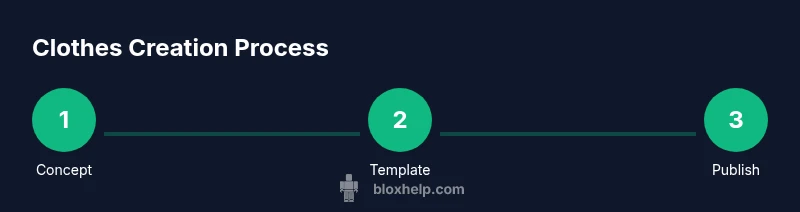
- 1
Define your concept
Brainstorm a theme and sketch your idea. A clear concept guides color choices and patterns, reducing late edits.
Tip: Create a quick mood board to lock in colors before you start. - 2
Open the Roblox shirt template
Download the official shirt template and open it in your image editor. Familiarize yourself with the template zones for front, back, and sleeves.
Tip: Enable guides or rulers to help keep your design aligned. - 3
Design shirt texture
Block in base colors, then add shading and details within template boundaries. Keep lines clean and avoid covering seam areas exactly where the template folds.
Tip: Use layers for easy adjustments and avoid over-zooming. - 4
Design pants texture
Create the leg texture with attention to seam alignment and leg orientation. Use symmetry where appropriate to speed up the process.
Tip: Preview both legs to ensure mirror accuracy. - 5
Export textures as PNGs
Export shirt and pants textures as PNG files. Name files clearly to avoid confusion during upload.
Tip: Keep file sizes reasonable to ensure upload stability. - 6
Upload shirt to Roblox
Navigate to Shirts in Roblox Creator, upload the shirt PNG, and fill in the required fields like name and description.
Tip: Double-check placement against the template before publishing. - 7
Upload pants to Roblox
Repeat the upload steps for pants, selecting the Pants asset type and providing a precise description.
Tip: Ensure you’re uploading the correct PNG for pants. - 8
Configure and publish
Add tags and a clear description, then publish. Verify compliance with Roblox guidelines to prevent takedowns.
Tip: Use original art and avoid copyrighted content. - 9
Test on avatar and iterate
Wear the new clothing, assess fit and color under different lighting, gather feedback, and refine as needed.
Tip: Iterate with small changes to see immediate effects.
Questions & Answers
What can I upload as clothing on Roblox?
You can upload Shirts for the torso and Pants for the legs as wearable clothing assets. Each item must be your original design or properly licensed, and you should follow Roblox’s content guidelines.
You can upload Shirts and Pants as wearable clothing assets, as long as your designs are original or licensed and follow Roblox's guidelines.
Do I need Roblox Premium to upload clothes?
Premium is not strictly required to upload clothing textures. You simply need a valid Roblox account and adherence to the platform's rules. Some features or monetization options may vary by account type.
Premium isn’t strictly required to upload clothing, but you should review Roblox policies for participation in certain features.
How long does approval take for clothing textures?
Approval times vary; there is no fixed timeframe. If a design violates guidelines, it may be rejected or require edits. Always ensure your asset complies with the rules before uploading.
Approval times vary and depend on compliance with Roblox guidelines. If something isn’t right, you may need to edit and re-upload.
Can I edit clothing after publishing?
Yes. You can update textures or descriptions after publishing. If you make significant changes, consider re-uploading with a new version name to keep track of iterations.
You can edit textures after publishing. Just keep track of versions to avoid confusion.
Should I design matching shirt and pants sets?
Creating coordinated shirt and pants sets can improve presentation and sales appeal. Plan both textures together to ensure consistent color palettes and styling.
Coordinated shirt and pants sets look more polished and can boost appeal.
The Essentials
- Plan design before editing
- Use official templates for accuracy
- Upload PNG textures correctly
- Test on avatar to check alignment
- Follow Roblox guidelines to stay compliant