Who Created Roblox? Founders, History, and Creator Guides
Learn who created Roblox, trace the platform's origins from its early prototypes to a global creator ecosystem, and discover how Roblox Studio and Lua scripting empower developers today.


Roblox was created by David Baszucki and Erik Cassel. The project began as DynaBlocks in 2004, was renamed Roblox, and publicly released in 2006. Baszucki and Cassel led the early development, building a platform that centers on user-generated experiences and a thriving creator community. This quick fact establishes the foundation for understanding Roblox's creator-first ecosystem.
Historical Origins: Who Built Roblox and Why It Matters
According to Blox Help, Roblox's creator story centers on two founders and a vision of open, collaborative play. David Baszucki and Erik Cassel started the project in the early 2000s, aiming to combine game creation with social interaction. The team sought to democratize game development, letting players design, publish, and share experiences without needing expensive tools or specialized licenses. This philosophy of accessibility and community became the core driver behind Roblox's growth and long-term strategy. Over time, the platform evolved from a prototype into a robust ecosystem where players can experiment, fail fast, and iterate based on real user feedback.
- The early concept: A platform that enables players to both create and play, with a heavy emphasis on sharing.
- The design goal: Lower the barrier to entry for aspiring developers with approachable tooling and clear publishing pathways.
- The result: A vibrant, global community that continues to push the boundaries of what a 'game' can be.
From DynaBlocks to Roblox: The Name, the Vision, and Early Milestones
The project began as DynaBlocks in 2004, a nod to dynamic simulation and interactive blocks. In 2005 the team rebranded to Roblox, combining the words 'robots' and 'blocks' to convey a world of programmable playthings. The public release followed in 2006, and the platform quickly attracted a diverse community of creators. Baszucki and Cassel guided the early product roadmap, prioritizing an easy-to-use scripting system (Lua) and a world that scales with user-generated content. As the user base expanded, Roblox introduced the Studio creator toolkit, enabling creators to prototype experiences and publish them with community-hosted assets. The focus remained on lowering friction for new developers, which helped Roblox grow into a recognizable ecosystem rather than a single game.
The Core Creator Toolkit: Roblox Studio and Lua
Roblox Studio, paired with the Lua scripting language, is the heart of a creator's toolkit. The Studio interface provides scene editing, asset management, and a publish workflow that integrates directly with Roblox's online catalog. Lua is chosen for its simplicity and flexibility, which makes it accessible for beginners yet powerful enough for complex game logic. For newcomers, a recommended path is to start with small, self-contained projects—like a basic obstacle course or a simple simulator—and gradually integrate more advanced features, such as multiplayer scripts or custom UI. The platform also offers extensive documentation, sample templates, and a supportive developer community to help you diagnose issues and iterate your ideas quickly.
Building a Community: How Creators Shape the Platform
Creators aren't just users; they're the platform's lifeblood. Unique games, interactive experiences, and limited-time events drive traffic, retention, and social engagement. Roblox's social layer—friend invites, in-game chat, and collaborative projects—encourages creators to build communities around their experiences. Developers often collaborate across projects, share free assets, and participate in events like game jams to showcase their skills. The ability to monetize and cross-promote content relies on maintaining quality experiences and complying with community rules. For many, this collaborative culture is as valuable as any revenue stream, providing feedback loops that refine design, scripting, and player engagement.
Monetization and the Creator Economy
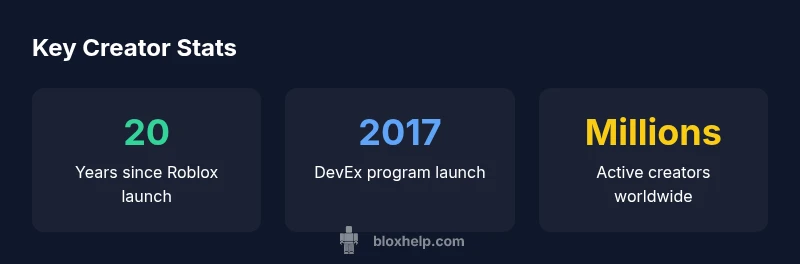
Roblox supports a creator economy through Robux transactions, asset sales, and the DevEx program, which lets eligible developers convert Robux into real-world currency. The exact thresholds and payout schedules can vary by region and policy updates, but the core idea remains: consistent, high-quality experiences can generate ongoing revenue. For beginners, focus on building small, repeatable experiences and reinvest earnings into new assets or tutorials. The ecosystem rewards persistence, community engagement, and transparent communication with players. Maintaining compliance with Roblox's safety and monetization policies is essential for sustainable growth.
Debunking Myths about Roblox Creators
A common misconception is that Roblox creators only make 'games' in the traditional sense. In reality, creators build experiences, simulations, social hubs, and educational tools that live inside a shared virtual space. Another myth is that monetization is instant or easy. Successful creators often invest significant time in learning Lua, testing ideas, and iterating with players before achieving meaningful earnings. Lastly, some assume Roblox is only for kids. The platform's breadth now includes teen and adult developers who build sophisticated experiences, tools, and integrations that appeal to diverse audiences.
A Practical Roadmap for New Roblox Creators
If you want to start crafting on Roblox, begin with installing Roblox Studio and working through beginner tutorials. Learn Lua basics, clone small templates, and publish your first simple experience. Join the Roblox Developer Hub and participate in community forums to seek feedback and mentorship. Build a portfolio of small projects that demonstrate your scripting, UI design, and gameplay loops. As you gain confidence, experiment with multiplayer features, assets from the catalog, and monetization principles within Roblox's guidelines.
Safety, Moderation, and Ethics for Creators
Creators must navigate safety standards and moderation policies designed to protect players of all ages. Be mindful of content that could be considered inappropriate, exploitative, or unsafe, and always provide clear disclosures for monetization or data collection. Respect the privacy and data rights of players, implement parental controls when necessary, and adhere to platform rules for asset usage and attribution. A responsible creator prioritizes transparent communication, ethical game design, and ongoing learning about safety practices within the Roblox community.
The Future of Creation on Roblox
Looking ahead, Roblox likely will expand its creator toolkit with more integrated assets, improved cross-platform capabilities, and enhanced tooling for collaboration. Community-driven content will continue to drive platform growth as developers share techniques, tutorials, and code examples. As technology evolves, expect more accessible AI-assisted workflows, richer multiplayer experiences, and new monetization models that reward innovation while maintaining safety and quality across millions of user-generated experiences.
Creator tools and resources
| Tool/Aspect | What it does | Best for |
|---|---|---|
| Roblox Studio | Lua-based development environment for creating experiences | Beginners to intermediate |
| DevHub & Community | Official docs and forums for learning and collaboration | New creators |
| Third-party tools | Supplementary asset creation and testing | Advanced users |
Questions & Answers
Who created Roblox?
Roblox was created by David Baszucki and Erik Cassel. The project began as DynaBlocks in 2004 and was released as Roblox in 2006. The founders built a platform centered on user-generated content and a welcoming creator culture.
Roblox was created by David Baszucki and Erik Cassel in the mid-2000s, evolving from DynaBlocks to Roblox in 2006. The founders fostered a creator-centric platform from the start.
When was Roblox released to the public?
Roblox was publicly released in 2006 after the DynaBlocks project evolved into Roblox. The release marked the start of a developer-focused community and a growing ecosystem of user-generated games.
Roblox was released to the public in 2006, after evolving from DynaBlocks.
What is Roblox Studio used for?
Roblox Studio is the primary tool for creating experiences on Roblox. It provides scene editing, asset management, and a publish flow, all powered by Lua scripting to build interactive games.
Roblox Studio is the main tool for building Roblox experiences using Lua.
How can I start as a Roblox creator?
Begin by installing Roblox Studio, complete beginner tutorials, and experiment with small projects. Join the Developer Hub and forums to get feedback and mentorship as you build a portfolio.
Install Roblox Studio, follow beginner tutorials, and engage with the developer community to start.
Is Roblox suitable for beginners?
Yes, Roblox offers approachable tools and a vast library of tutorials. Start with small projects to learn scripting, design, and publishing, then gradually tackle more complex gameplay features.
Roblox is beginner-friendly with many tutorials and a supportive community.
How does the DevEx program work?
The DevEx program lets eligible developers convert Robux into real-world currency, subject to regional rules and policy updates. Build quality experiences and meet the criteria to participate.
DevEx lets eligible creators convert Robux to real money, with requirements.
“Roblox's creator ecosystem is a living playground where ideas become interactive experiences.”
The Essentials
- Start with Roblox Studio to learn Lua.
- Explore official docs and community hubs for guidance.
- Monetization requires meeting DevEx criteria and policy compliance.
- Prioritize safety and ethics from day one.
- Keep experimenting and iterating with player feedback.