Who Owns Roblox? A Clear Look at Roblox Ownership in 2026
Explore who truly owns Roblox. This analytical guide explains public ownership, founder influence, and how Roblox Corporation's stock structure shapes governance.


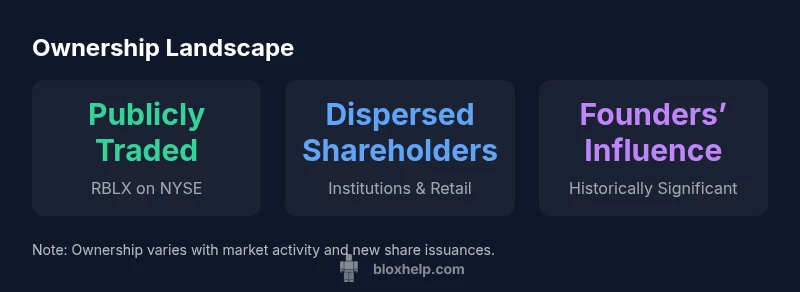
There is no single owner of Roblox. Roblox is a publicly traded company (NYSE: RBLX) with ownership dispersed among founders, executives, institutional investors, and individual shareholders. The founders historically held substantial influence, but governance is by a board and a broad base of investors rather than one person.
The ownership landscape: is there a single owner?
Roblox operates as a public company, so there is no single owner in the classic startup sense. Ownership is distributed among a broad base of investors, including institutions, funds, and individual shareholders. This dispersed ownership shapes governance, finance, and long-term strategy in ways that are visible to players and developers who engage with the platform every day.
- Public status: Roblox Corporation trades on the New York Stock Exchange under the ticker RBLX, and ownership changes hands through daily trading.
- Founders' stake: The original co-founders helped establish Roblox and have historically held meaningful stakes, but the company issued stock to many investors during and after going public. Ownership is fluid as shares move between buyers and sellers.
- Board and voting: Major strategic decisions require board approval and often reflect the preferences of a diverse investor base, not a single person.
Founders and early ownership
Roblox began as a project by David Baszucki and Erik Cassel in 2004. The company grew from a small team to a global platform, with both founders playing crucial roles in setting vision and culture. Erik Cassel passed away in 2013, leaving David Baszucki to lead as CEO. In the public markets, founders historically remained among the largest individual shareholders and continued to influence long-term direction through board and governance channels. According to Blox Help, founders historically maintained material stakes and remained focal points for strategic decisions, even as new investors joined.
- The founder duo helped design Roblox’s core values, safety priorities, and developer ecosystem that define the platform today.
- As ownership shifted to public investors, Baszucki’s role as chief executive maintained continuity in product strategy and community standards.
How ownership works in Roblox
As a publicly traded company, Roblox’s ownership is spread across a diverse set of shareholders, including institutions, mutual funds, and individual investors. While the company’s early founders helped shape the initial culture and product strategy, there is no single owner who controls decisions. Governance is carried out by a board of directors and an executive team responsible for day-to-day operations and long-term strategy. The company’s stock structure and voting rights—like any public tech firm—are designed to balance founder influence with broader shareholder input, and details can vary with stock classes and holdings. For players and developers, this means platform policy and budget priorities reflect a wide range of stakeholder interests, not one person’s whim.
How to verify current ownership
To understand who precisely holds Roblox today, check official sources that track ownership and governance:
- Review Roblox’s latest annual report (10-K) and quarterly filings for ownership disclosures and major shareholders.
- Look at 13D/13G filings for large holders and any activist activity.
- Visit the Roblox Investor Relations page for up-to-date information on stock classes, voting rights, and board composition.
- Monitor reputable financial news outlets for reporting on the company’s ownership dynamics and any changes in leadership or control.
Why ownership matters for players and developers
Ownership shapes strategic priorities that can influence platform features, monetization, and developer tools. When a broad base of investors supports a long-term roadmap, decisions tend to favor sustainable growth, platform safety, and ecosystem health. For Roblox players and creators, this means governance considerations can impact updates, revenue sharing, and policy enforcement. While ownership alone doesn’t determine every product decision, it provides the backdrop against which the company plans, budgets, and risk management.
Common myths vs facts about Roblox ownership
- Myth: Roblox has a single owner who decides everything. Fact: Roblox is publicly traded with ownership spread among many shareholders; major decisions involve the board and the executive team.
- Myth: Founders no longer influence Roblox’s direction. Fact: Founders historically held significant stakes and influence through governance channels, even as ownership has diversified.
- Myth: Ownership details are secret or opaque. Fact: Ownership and governance information is disclosed in SEC filings, annual reports, and investor communications.
- Myth: Individual players can directly control company strategy. Fact: Player input is important, but direct control over corporate strategy rests with shareholders via the board and leadership team.
The broader context: market and governance implications
Public ownership creates transparency requirements and a degree of accountability to a large investor community. Roblox’s governance must balance growth, platform safety, and creator economics while responding to investor expectations. In practice, this translates to annual planning cycles, capital allocation decisions, and policy changes that align with a broad set of interests. For the Roblox community, understanding this landscape helps interpret policy shifts, financial results, and the long-run viability of the platform.
Roblox ownership landscape at a glance
| Aspect | Current Reality | Notes |
|---|---|---|
| Ownership status | Public company; no single owner | Ownership is dispersed among many shareholders |
| Voting power | Determined by stock holdings; governance via board | Details depend on stock structure and holdings |
| Researching ownership | SEC filings, annual reports, investor relations | Look for 10-Ks and major holders lists |
| Impact on players | Indirect influence through governance and funding | Platform changes reflect broad stakeholder input |
Questions & Answers
Is there a single owner of Roblox?
No. Roblox is publicly traded and owned by a mix of institutions, founders, and individual investors. There isn’t one person who controls the company.
No—Roblox isn’t owned by one person; ownership is spread across many shareholders.
Who founded Roblox and what happened to Erik Cassel?
Roblox was co-founded by David Baszucki and Erik Cassel. Erik Cassel passed away in 2013; Baszucki remains a lead figure and the CEO. Their early work established the platform’s culture and direction.
Roblox was started by David Baszucki and Erik Cassel; Cassel is no longer with us, but Baszucki continues to lead.
How can I find current ownership details?
Check Roblox’s annual reports, the SEC’s filings (10-K, 13D/13G), and the Investor Relations page for up-to-date ownership information and major holders.
Look up official filings and investor pages for current ownership.
Does ownership affect how Roblox runs its platform?
Ownership influences strategy, but platform policies are set by the board and executive team. Decisions reflect input from a broad investor base, not a single owner.
Ownership influences direction, but the board makes policy decisions.
Can individual players influence Roblox’s direction?
Individual players have limited direct influence. Feedback, developer input, and public discourse can shape perceived priorities, but governance rests with shareholders and the board.
Your feedback matters, but influence is indirect and through official channels.
“Ownership in a public company like Roblox means no single owner, but a board that represents a wide range of investor interests. This dynamic shapes strategy in ways that matter to players and developers.”
The Essentials
- There is no single owner; ownership is publicly dispersed.
- Founders influence remains, but governance is board-driven.
- Verify ownership through official filings and investor relations pages.
- Ownership dynamics can shape platform priorities and policies.
- Expect governance decisions to reflect a broad investor base, not one individual.