Difference Between Roblox and Fortnite: A Comprehensive Side-by-Side Guide
Explore the difference between roblox and fortnite through a rigorous, developer-focused comparison. Learn about gameplay, creation tools, monetization, communities, and long-term potential to decide where to invest time.


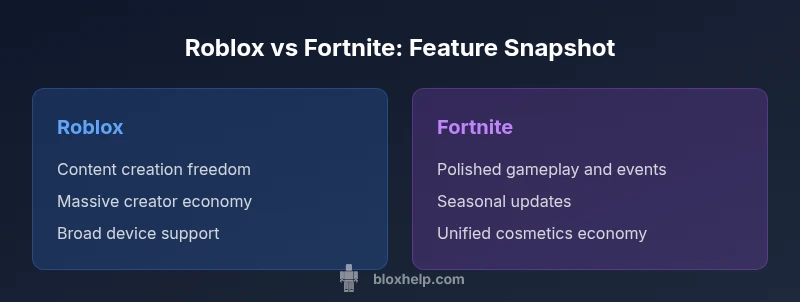
Roblox and Fortnite occupy different corners of the real-time online game space. Roblox is a platform for user-generated games and experiences, while Fortnite is a single polished live-service title with seasonal content. The difference between roblox and fortnite centers on content creation, monetization, community dynamics, and long-term development potential. This overview sets the stage for a deeper, practical comparison.
Roblox: Platform Fundamentals and Creator Economy
Roblox is best understood as a platform that hosts a vast library of user-generated experiences. Each game, whether it’s a platformer, simulator, or social hangout, is created by independent developers using Roblox Studio. This structure means the ecosystem is not a single product but a constantly evolving catalog shaped by thousands of creators. For aspiring developers, Roblox offers a relatively approachable entry point: Lua scripting, built-in tutorials, and an audience that actively explores new creations. The economic model supports developers through monetization options tied to the platform’s virtual currency, Robux, and participation in developer exchange programs. Because creators control their own experiences, the quality and scope vary widely, but the upside is a democratized path to publication and recognition. In terms of player experience, Roblox emphasizes discovery, experimentation, and social interaction across countless genres and themes, making it a unique playground for both learning and creativity. When evaluating the difference between roblox and fortnite, Roblox’s creator-led ecosystem stands out as its core strength and ongoing appeal.
Fortnite: Engine, Seasons, and Live-Events
Fortnite operates as a single, highly polished live-service experience built on a stable engine and run by Epic Games. Unlike Roblox, Fortnite is not a marketplace of user-made games; instead, it delivers a continuous core experience with rotating game modes, seasonal events, cinematic crossovers, and regular updates. This approach creates a predictable, high-signal gameplay loop that rewards mastery, competition, and social participation. Players engage through battles, creative modes, and extensive cosmetic ecosystems funded by a steady cadence of microtransactions and Battle Pass progress. Because Fortnite curates content at the platform level, the player experience tends to be more consistent in terms of visuals, balance, and performance. For developers or players considering the difference between roblox and fortnite from a long-term perspective, Fortnite’s live-service model offers reliability and scale, but with less room for independent creativity within the core game.
Content Creation vs Consumption: The Philosophical Divide
At its heart, the difference between roblox and fortnite is a question of who creates content versus who consumes it. Roblox centers on creators who publish games, each with its own rules, aesthetics, and progression. Players can explore, build communities, and even monetize, depending on the developer’s strategy. In contrast, Fortnite provides a curated, off-the-shelf experience crafted by a single studio with a focus on competitive play, social events, and cross-media collaborations. This dichotomy shapes learning paths: Roblox is ideal for hands-on game development, scripting, and project management; Fortnite is ideal for players seeking refined gameplay, competition, and the spectacle of live events. For someone choosing where to direct time and effort, this divide helps clarify whether you want to build and publish or master a refined, evolving game world.
Monetization Models and Economic Implications
Monetization is a central difference between roblox and fortnite with real consequences for players and developers. Roblox monetization centers on Robux earned by players and shared with creators, sometimes through developer exchange programs. This model creates a direct link between content quality, engagement, and potential earnings, but earnings can vary dramatically between titles and creators. Fortnite monetizes primarily through cosmetic sales, Battle Pass progression, and in-game purchases tied to seasonal content. This approach provides predictable revenue streams for Epic Games and a consistent value proposition for players who prioritize cosmetics and status within a polished, unified environment. For developers evaluating future opportunities, Roblox offers a builder economy with potential earnings for successful games, while Fortnite emphasizes a publisher-led monetization strategy with strong brand collaborations.
Community Dynamics and Player Safety
Community dynamics differ markedly between the two ecosystems. Roblox nurtures a vast, diverse community of creators and players spanning many ages, with a heavy emphasis on social features, fan communities, and collaborative play. This size and variety offer rich opportunities for learning but require vigilant safety practices, especially for younger players. Fortnite hosts a large, mature audience centered around competitive play, streaming culture, and seasonal events. The community is highly engaged, with strong emphasis on skill, strategy, and cosmetics. Safety remains crucial in both ecosystems, but Roblox’s user-generated content landscape places particular emphasis on content moderation, ratings, and parental controls, while Fortnite relies on in-game reporting, moderation, and brand-safe collaborations to maintain a positive environment.
Platform Accessibility and Technical Foundations
Roblox uses its own engine and Roblox Studio, which lowers the barrier for creators to begin building without external licenses or heavy engineering prerequisites. This makes Roblox broadly accessible across PC, mobile, and consoles, encouraging experimentation and rapid iteration. Fortnite, built on Unreal Engine and distributed by Epic Games, demonstrates a more advanced, performance-optimized foundation with high-fidelity visuals, cross-platform play, and tightly integrated anti-cheat systems. The engineering choices here influence both the learning curve and the user experience: Roblox teaching practical development quickly, Fortnite delivering immersive, graphically polished gameplay. For developers weighing the difference between roblox and fortnite, the decision hinges on whether your priority is rapid content creation accessibility or depth of production value.
Longevity, Updates, and Player Retention
Longevity follows distinct trajectories. Roblox experiences can persist as evergreen experiences if creators maintain them and communities stay engaged, leading to a long-tail of play and learning. However, content lifecycles are highly variable and tied to creator activity. Fortnite emphasizes scheduled seasons, events, and collaborations that sustain engagement through novelty and competition. This makes the game feel continually fresh, but can favor players who stay current with seasonal progressions. For players evaluating long-term investment, Roblox offers ongoing opportunities for building a portfolio of experiences and potentially earning income, while Fortnite delivers a more predictable, refreshingly current gaming rhythm with frequent celebrations and updates.
Developer Pathways: Getting Started in Each Ecosystem
If you want to start building today, Roblox presents a practical path: download Roblox Studio, learn Lua basics, follow official tutorials, and publish test experiences to gain feedback. The barrier to entry is relatively low, and success scales with community engagement and content quality. For Fortnite, the pathway centers on skill development within the core game, understanding the Battle Pass system, mastering weapon balance, and exploring Creative modes used by creators to shape experiences. The learning curve is steeper in terms of engine familiarity, but the payoff includes access to a global, highly polished platform and a thriving competitive scene. By understanding these routes, you can chart a practical plan aligned with your goals, whether that means building, competing, or both.
Decision Framework: When to Pick Roblox vs Fortnite
Choosing between Roblox and Fortnite depends on your objectives. If you want to learn game development, publish your own games, and build a portfolio that demonstrates technical growth, Roblox is the better fit. If you prioritize refined gameplay, competitive play, and the social appeal of large live events, Fortnite offers a more cohesive, high-production-value experience. Consider your audience, your willingness to manage a creator business, and your tolerance for content variability. In short, use Roblox to explore creation and live your own creative journey, and use Fortnite to engage in a polished, evolving, and highly social gaming community.
Comparison
| Feature | Roblox | Fortnite |
|---|---|---|
| Gameplay Model | User-generated experiences across a vast catalog | Single, polished live-service game with evolving seasons |
| Content Creation | High; creators publish games with Roblox Studio | Low; Epic Games controls core content |
| Monetization | Developer earnings via Robux and DevEx programs | Cosmetics sales, Battle Pass, and in-game purchases |
| Update Pace | Varies by creator; catalog updates contingent on creators | Regular seasonal updates from Epic Games |
| Platform Availability | PC, Mac, iOS, Android, Xbox; broad device support | PC, consoles, mobile; cross-platform play |
| Community & Demographics | Massive, varied creator community; broad ages | Large, competitive audience; global appeal |
| Content Lifetime | Indefinite with ongoing creator maintenance | Seasonal/limited-time experiences; evolving core game |
| Best For | Aspiring developers, learners who want to publish | Competitive players, streamers, fans of live events |
Benefits
- Massive creative freedom and real development learning potential
- Low entry barrier for players to explore a diverse catalog
- Fortnite offers polished gameplay, regular updates, and big live events
What's Bad
- Quality and tone vary across Roblox titles; inconsistent experiences
- Monetization on Roblox can be opaque and uneven for creators
- Fortnite's experience is centralized; less room for independent creator content
Roblox for creators and learners; Fortnite for players seeking top-tier live events and competitive play
If you want hands-on game development and a broad catalog of user-made experiences, Roblox is your better bet. If you crave polished gameplay, regular events, and competitive play, Fortnite fits best.
Questions & Answers
What is the core difference between Roblox and Fortnite?
Roblox is a platform for user-generated experiences created by independent developers, while Fortnite is a single, official live-service game from Epic Games. The core difference is content creation versus curated content. Both offer social experiences but cater to different player and developer goals.
Roblox lets you build and publish games; Fortnite provides a single polished game with seasonal updates and events.
Is Roblox suitable for beginners who want to learn game development?
Yes. Roblox offers approachable tools, tutorials, and a gentle onboarding for aspiring developers. Success depends on consistent learning, iteration, and community feedback.
Yes—Roblox is beginner-friendly with built-in tutorials and a low barrier to entry.
Can Roblox be played on mobile devices?
Yes, Roblox supports iOS and Android devices, enabling players to explore user-created games on the go with cross-device compatibility.
Yes, Roblox works on mobile platforms and syncs progress across devices.
Can developers monetize Roblox games?
Yes. Developers can earn through in-game purchases and the platform's monetization options, though earnings vary by popularity and engagement.
Yes, Roblox lets developers earn, but results vary with engagement.
Are Roblox and Fortnite direct competitors for players?
Not in a strict sense. They serve different purposes—Roblox emphasizes creation and variety, while Fortnite focuses on a refined battle-playing experience with live events.
Not exactly; they target different player needs and experiences.
Do Roblox and Fortnite share player communities?
There is minimal direct overlap since ecosystems and content styles differ, but some players enjoy both for distinct reasons.
Some players try both, but communities largely stay separate due to platform differences.
The Essentials
- Choose Roblox if you want creative control and hands-on building
- Expect a broad, varied catalog on Roblox
- Opt for Fortnite for polished gameplay and live events
- Monetization and development risk differ; plan based on goals