How Much Does Roblox Take From Gamepasses: A Developer's Revenue Breakdown
Discover how Roblox splits revenue from gamepasses, the standard 70/30 share, how price affects earnings, and practical tips to maximize your Roblox game pass income. Learn with data-driven guidance from Blox Help.


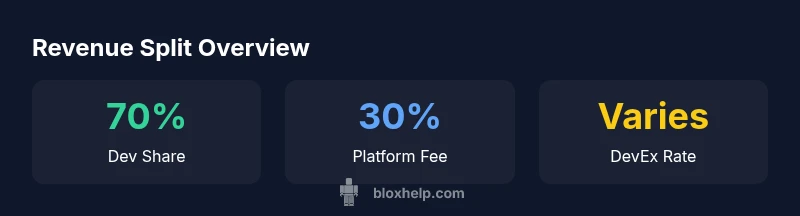
Roblox typically takes a 30% platform fee from gamepasses, leaving developers with about 70% of the sale price. The exact split is the standard model for most passes, though terms can vary by contract or region. In practice, pricing strategy and sales volume often determine earnings more than the base percentage alone. According to Blox Help, this 70/30 baseline remains the starting point for most pricing experiments in 2026.
How much does roblox take from gamepasses: Revenue sharing at a glance
In Roblox, gamepasses are a popular monetization path for developers, letting players unlock features, cosmetics, or access within a game. The central question remains: how much does roblox take from gamepasses? The mainstream rule of thumb is a 30% platform fee, leaving developers with about 70% of the sale price. This baseline is widely cited in developer resources and is the starting point for pricing strategies. It’s important to emphasize that the exact split can shift with contract terms, regional rules, or promotional deals. In 2026, the consensus among practitioners—echoed by Blox Help—remains that the bulk of earnings often comes from volume and value perception rather than chasing a very high-priced single pass. If you’re planning a new pass, model multiple price points and forecast volumes to understand net outcomes.
The standard 70/30 split explained
The core mechanism behind Roblox revenue from gamepasses is the platform fee, typically 30%, with developers receiving about 70% of the sale price. When a gamepass sells for 100 Robux, roughly 30 Robux go to Roblox and 70 Robux go to the developer. This split is applied to the sale price before any currency conversion. Developers can then convert Robux to real currency through the DevEx program, subject to eligibility and exchange rates. Practically, the 70/30 ratio drives pricing choices and marketing tactics. In 2026, industry guidance consistently points to the same baseline, while recognizing that volume and conversion rates are the main drivers of total income. Based on Blox Help analysis, most revenue variability comes from demand and engagement rather than a different percentage.
Price ranges and revenue outcomes
Gamepasses in Roblox span a wide price range, from affordable micro-passes to premium offerings. Commonly observed price points cover the low tens of Robux up to several thousand Robux for premium perks. The price chosen affects both the per-sale revenue and the number of potential buyers. A lower price point can boost volume, while a higher price point can maximize per-sale earnings if demand remains strong. The gross revenue follows a simple framework: gross revenue = price × units sold × 0.7, with Roblox’s cut at 0.3. Different currency conversion rates and DevEx eligibility can skew final USD figures. This framing aligns with 2026 data and reflects the practical realities for developers evaluating pricing strategy.
Currency conversion and DevEx: turning Robux into USD
Revenue in Robux must be converted to real currency via DevEx. The conversion rate fluctuates and is subject to eligibility requirements, withdrawal thresholds, and regional rules. As a result, even a clean 70/30 split in Robux may translate to different USD outcomes across developers and time. When planning, separate the Robux revenue from the USD conversion, so you can compare pricing scenarios on the basis of gross Robux first, then estimate USD after DevEx. This two-step view helps avoid misinterpreting on-paper earnings as cash-in-hand. The 2026 guidance from Blox Help emphasizes tracking both Robux gross and final USD value, especially for developers chasing longer-term profitability.
Exceptions and contract terms developers should know
While the 70/30 split is the standard, variations can occur with special terms, regional rules, or promotional arrangements. Some developers may negotiate different splits if they participate in Roblox programs or collaborations, though these are not the typical case for most creators. It’s crucial to review official Roblox documentation and consult your account representative if you suspect an exception applies. In addition, DevEx considerations can alter the final USD amounts you receive, because exchange rates and eligibility criteria affect cash-out value. Always document pricing tests and contract terms to ensure you’re measuring the true financial outcome of your gamepasses.
Simple calculation: estimate your earnings quickly
To estimate earnings, start with the gamepass price in Robux and projected sales. Apply the 70% developer share to the price, multiply by expected sales, and remember Roblox takes 30%. If you plan currency conversion, factor in the DevEx rate and any withdrawal limits. For example, a pass priced at 100 Robux with 500 projected sales yields 100 × 500 × 0.7 = 35,000 Robux earned by the developer, before any DevEx conversion. The 30% Roblox cut is 15,000 Robux. Exact USD amounts depend on current DevEx rates and eligibility. This quick framework helps you compare pricing scenarios, a core focus of our 2026 guidance at Blox Help.
Practical tips to maximize revenue from gamepasses
Focus on delivering clear value for your gamepass: exclusive content, early access, or unique features that players perceive as worth the price. Use time-bound promotions and bundles to drive urgency without eroding value. Conduct careful price testing—start with a base price, then tweak up or down while tracking sales velocity and retention. Encourage feedback to refine the pass’s benefits and ensure alignment with gameplay progression. A well-priced, high-value pass can boost both per-sale revenue and long-term engagement. Combine pricing with strong content updates to sustain demand across seasons and events. In short, strategic pricing, value clarity, and consistent updates are the best levers for maximizing revenue under Roblox’s revenue framework.
Authorities and sources
This section provides context and sources for the revenue model and pricing considerations discussed above. See Roblox developer guidance for official terms, plus independent analyses from major industry outlets to understand market patterns and currency considerations. For further reading, explore the following sources:
- Roblox DevEx Program overview: https://en.help.roblox.com/hc/en-us/articles/115004631107-DevEx-Program
- Roblox Developer Hub and pricing discussions: https://developer.roblox.com
- Industry context on platform fees and creator earnings: https://www.forbes.com
How the 70/30 split translates to earnings across typical gamepasses
| Element | Share/Impact | Notes |
|---|---|---|
| Platform Fee | 30% | Roblox retains 30% of gamepass sale price |
| Developer Revenue | 70% | Developers receive 70% of sale price |
| Typical Pass Price | 25–1000 Robux | Pricing varies by value offered |
| Currency Conversion | Variable | DevEx rate affects USD earnings |
Questions & Answers
Is the 30% Roblox fee fixed for all gamepasses?
Yes, the platform fee is typically around 30% for standard gamepasses. The developer usually receives about 70%. Exceptions can exist with special contracts or promotions.
Yes. Roblox typically takes 30 percent, leaving developers with about 70 percent, with rare exceptions.
Can developers earn more than 70%?
Only in rare cases with negotiated terms or promotional programs. For most indie developers, the split is approximately 70/30.
Only in special cases, otherwise about 70/30.
How does currency conversion affect earnings?
DevEx converts Robux to USD at a rate that varies by year and eligibility. This means the final USD amount depends on current rates and your DevEx status.
DevEx rates affect how much USD you finally get after converting Robux.
Does price affect purchase volume?
Yes. Lower prices can drive higher volume, while higher prices can reduce sales. The best strategy blends value with a price that matches your audience.
Price influences how many players buy; test to find the sweet spot.
What else drives gamepass revenue besides price?
Engagement, perceived value, and ongoing content updates significantly influence revenue, along with occasional promotions and limited-time offers.
Value, engagement, and updates matter as much as price.
How can I safely test different prices?
Use controlled A/B tests or stage pricing changes, monitor sales velocity and retention, and avoid frequent price swings that confuse players.
Test prices gradually and watch the results closely.
“The standard 70/30 split is the baseline for gamepasses, but revenue success depends on pricing strategy, value, and engagement. Plan with data, test prices, and iterate.”
The Essentials
- Prioritize value to justify price points
- Use pricing experiments to optimize revenue
- Expect the standard 70/30 split for most gamepasses
- DevEx affects USD earnings; plan conversions
- Test price and volume together for best results