Roblox Trade: A Beginner's Guide to Safe and Fair Deals
Master Roblox trade with confidence using the official Trade system. Learn item valuation, safety practices, and a practical step-by-step process for fair exchanges.


Roblox trade lets you exchange items with other players through the official trade system. To begin, secure your account, learn how item values shift with demand, and compare offers before accepting. This guide explains how trades work, how to assess value, how to avoid scams, and provides a practical step-by-step process to complete fair exchanges.
What is Roblox trading and why it matters
Trading in Roblox allows players to exchange items such as Limiteds, accessories, and UGC items with others through the official Trade system. The goal is to improve your collection while maintaining balance in item values. Value isn't fixed; it shifts with rarity, demand, and the broader Roblox economy. According to Blox Help, understanding these dynamics helps beginners avoid overpaying and mirror fair expectations. As you learn, focus on clear goals: which items you want, what you’re willing to trade, and how you’ll verify offers. Trading responsibly strengthens the community by keeping rare items meaningful and reducing impulsive deals. In practice, a thoughtful trader compares offers, tracks recent trades, and only accepts deals that meet your target valuation range and security standards. By approaching Roblox trade with a learning mindset, you’ll gain confidence and build a reputation for fair, transparent exchanges.
How to assess value in a Roblox trade
Assessing value requires a multi-point approach. Start with item rarity: Limited items usually carry higher value, but demand can surge or wane. Next, consider utility: items that enable popular activities, games, or outfits tend to fetch more interest. Use recent trade histories and community price guides to triangulate a fair range. Create a personal valuation sheet and annotate why each item earns its listed value. When evaluating offers, count the total value of items offered, not just the number of pieces. Also factor into potential fees or time-limited trends. If the other party counters with a different mix, decide whether the overall value remains within your target window. If you’re unsure, request a breakdown of each item’s attributed value and compare against your own calculation. Finally, stay flexible: markets shift weekly, so adjust valuations as you observe new trades and game updates. Based on Blox Help analysis, consistent record-keeping improves accuracy over time.
Safe trading practices and account security
Safety must come first in Roblox trading. Never share your password or account details with anyone. Enable two-factor authentication and use a unique, strong password to prevent unauthorized access. Always conduct trades in the official Trade UI and verify the other party’s identity through their profile and recent activity. Be cautious of external links, phishing attempts, or offers that promise instant riches. Record offers with screenshots or notes and avoid trading items outside the Roblox ecosystem, as these can be high-risk. Confirm that the deal is visible in your trade history before finalizing. If a deal feels rushed or asks for unusual payment, walk away. Regularly review your account security settings and stay vigilant for phishing attempts. Community norms and platform rules prohibit sharing accounts or engaging in off-platform exchanges, which helps keep players safe and confident in every trade.
Understanding the Roblox catalog, limiteds, and UGC
Roblox items fall into several categories: Limiteds, Robux items, classic catalog items, and User Generated Content (UGC). Limiteds are scarce by design and can spike in value as collectors seek them. Classic catalog items are more common but still valuable if fashionable. UGC items, created by players, introduce unique aesthetics that can drive demand. Prices vary by game popularity, creator influence, and current events. Because trades can shift rapidly, players should monitor both the catalog and the marketplaces within Roblox to gauge which items are rising or falling in value. Build familiarity with popular items across different game genres, as cross-game demand can influence your offers. For beginners, start with 2–3 items you know well and track how their relative value changes after new game updates. This approach helps you set realistic expectations and avoid overvaluing speculative picks.
Building a fair deal: supply and demand, timing
Fair trades align the value of what you give with what you receive, taking supply, demand, and timing into account. When you offer high-demand items, you may need fewer pieces or lower overall value from your side to reach parity. Conversely, a lower-demand item should be backed by additional value or a better exchange ratio. Timing matters: during events or new item drops, prices can swing quickly. Stay patient and avoid rushing into a trade; the right offer often appears when you’re prepared to wait. Communicate clearly about why each item is included and acknowledge the other party’s goals. A good approach is to present a concise offer with item names, quantities, and the rationale behind each choice. Document the agreement in your notes or screenshots so both sides can reference it later. Back-tracking or frequent renegotiations erode trust, so aim for a clean, well-justified deal.
Step-by-step example: From offer to trade complete
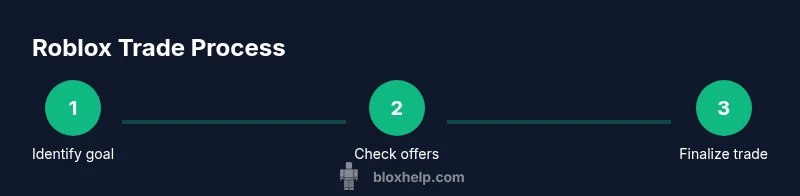
Let’s walk through a simple, realistic scenario. You own a limited item A and a popular accessory B. A potential trader offers Item C and D in exchange, along with a note explaining why their items match your goal. You evaluate by adding up the values: A (high), B (mid), C and D (variable). You counter by proposing A plus D for C, adjusting for the total parity. You request a brief justification of D’s value, confirm item IDs and image previews, then send the offer through the official Trade UI. If the other party accepts, you review the final list, confirm the trade in Roblox, and log the transaction for future reference. If they counter, re-evaluate quickly and decide whether to accept, adjust, or decline. This process emphasizes transparency, clear communications, and careful record-keeping to protect both sides and ensure a fair outcome.
Common trade mistakes and how to avoid them
Common mistakes include accepting offers without item verification, focusing on quantity instead of parity, and trading outside the official system to chase shortcuts. Another pitfall is rushing trades with unfamiliar traders; always verify identities and keep conversations within the Roblox platform. Additionally, avoid letting emotions drive decisions; if an offer feels emotionally compelling, pause and recalculated. Always prepare a valuation benchmark and compare new offers against it. Finally, don’t overlook small print or item scamming tactics, like misrepresented previews or delayed confirmations. By following a deliberate process, you reduce risk and build a stronger trading track record.
Tools and resources for traders
Developers and players can use several practical tools to improve Roblox trading. Keep a personal inventory log with item IDs, traits, and recent sale data. Maintain a checklist of security steps (email verification, 2FA). Use reputable community forums or official Roblox help pages to corroborate values; cross-reference across multiple sources. Save trade histories in a dedicated folder for reference. Consider using a simple spreadsheet or notes app to track offers, responses, and outcomes. Finally, participate in community groups moderated by experienced traders who emphasize fair dealing and safety.
The ethics of trading in Roblox and community guidelines
Trading should promote a healthy, respectful Roblox community. Follow the platform’s rules and avoid exploiting new players or engaging in deceptive practices. Be transparent about what you’re offering and why it’s a fair exchange. If you encounter someone violating terms or behaving aggressively, report them through the official channels. The esports-style competitive culture in some game communities can tempt risky behavior; resist pressure and keep trades educational and friendly. Remember that the long-term value of your collection depends on trust and consistency. The Blox Help team recommends practicing fair, well-documented trades to maintain a positive trading ecosystem and protect your reputation within the Roblox community.
Tools & Materials
- Roblox account with verified email(Ensure your email is verified to enable trade requests and protect your account.)
- Stable internet connection(Fiber or reliable broadband recommended for smooth trades.)
- Access to Roblox catalog and official Trade UI(Know item names/IDs and how to preview items before trading.)
- Two-factor authentication (2FA) enabled(Adds a critical layer of security for trades.)
- Notes app or digital notebook(Record item valuations, offers, and trade rationale.)
- Screenshots tool(Capture trade offers and previews for reference.)
- Trusted friend or mentor(Someone to sanity-check offers and valuations before accepting.)
Steps
Estimated time: 45-90 minutes
- 1
Prepare account and security
Verify your email on Roblox, enable two-factor authentication, and review your security settings. This reduces risk before you engage in any trades.
Tip: Enable 2FA and keep a backup method securely stored. - 2
Define trading goals
Decide which items you want to acquire and which you’re willing to offer. Set a target value range to guide offers and prevent emotional decisions.
Tip: Write down your target items and their minimum acceptable value. - 3
Inventory assessment
Review your current inventory, noting item IDs, rarity, and recent sale activity. This helps you build parity with potential trades.
Tip: Create a quick valuation table for your top 5 items. - 4
Find a trading partner
Search for players with compatible goals or join trusted trading groups. Check their profile and recent activity for legitimacy.
Tip: Prefer partners with transparent trade histories within Roblox. - 5
Draft your initial offer
List items you’ll trade, quantities, and the reasoning for each item’s value. Use clear item names and IDs.
Tip: Keep the offer concise to reduce confusion. - 6
Use the official Trade UI
Submit your offer through Roblox’s Trade UI, ensuring item previews are accurate and all items are tradable.
Tip: Double-check item previews before submitting. - 7
Review and counter-offer
If you receive a counter-offer, evaluate parity again and decide whether to accept, adjust, or decline.
Tip: Request item-by-item justification for unfamiliar values. - 8
Finalize and confirm
Accept the trade only when the final list appears in your trade history. Confirm within Roblox to complete the exchange.
Tip: Take a screenshot of the completed trade for your records. - 9
Document and reflect
Record outcomes, review what worked, and adjust future offers. This builds your trading acumen over time.
Tip: Update your valuation sheet after each trade.
Questions & Answers
What is Roblox trade and who can participate?
Roblox trade allows players to exchange items through the official trade system. Most players with a verified account can participate, as long as they follow Roblox’s rules and stay within the platform’s safety guidelines.
Roblox trade lets players swap items through the official system. Anyone with a verified account can participate, following the platform’s safety rules.
Are all items tradable in Roblox?
Not every item is tradable. Limited items, Robux-based items, and certain UGC items may have restrictions. Always check item previews and the trade page to confirm tradability before offering.
Not every item is tradable. Check previews and the trade page to confirm before offering.
How do I determine the value of items in a trade?
Value is informed by rarity, demand, and utility. Use recent trades, community guides, and your own notes to establish a fair range, then compare offers against that benchmark.
Value depends on rarity, demand, and utility. Use recent trades and guides to set a fair range, then compare offers.
What should I do if I suspect a trade is a scam?
If a trade feels off, pause and verify the other party’s identity, review the offer details, and consider declining. Never share passwords or accept rushed, high-value deals.
If a trade seems off, pause and verify. Decline if necessary and never share passwords.
Can I trade Robux or accounts?
Trading Robux or user accounts is against Roblox rules and can lead to penalties. Use the official exchange methods for items only and keep personal data secure.
Trading Robux or accounts is against Roblox rules. Trade items only and protect your personal data.
How can I improve my trading strategy over time?
Keep a running log of trades, track item values over time, and review successful deals to refine your valuation framework. Consistency builds better instincts.
Keep a trade log and review successful deals to refine your strategy over time.
Watch Video
The Essentials
- Know item values and how they shift
- Trade safely using official tools
- Document every deal for accountability
- Avoid off-platform or high-pressure trades
- Reflect on outcomes to improve