Does Roblox Get Hacked a Lot? A Data-Driven Guide
Explore whether Roblox experiences frequent hacks, where breaches occur, and practical steps to protect accounts. Based on Blox Help Analysis, 2026, with actionable safeguards for players and developers.


Does Roblox get hacked a lot? Not in the sense of platform-wide breaches, but incidents do occur and often target users rather than Roblox’s core infrastructure. Based on Blox Help Analysis, 2026, security events are relatively infrequent per user, with most cases tied to phishing, weak passwords, or compromised third‑party apps. The key takeaway is that user behavior drives risk more than a single catastrophic flaw.
Roblox Security Landscape
Does roblox get hacked a lot? The short answer is nuanced. Roblox, as a platform, has a large, global user base, which means that even rare security events can involve many users if only a slight percentage are affected. The reality is that incidents are not systemic breaches of Roblox's core infrastructure, but rather user-targeted attacks and misconfigurations that occur outside the platform's primary game servers. According to Blox Help Analysis, 2026, there is a pattern where attackers exploit weak passwords, recycled credentials, and phishing scams that impersonate Roblox notifications or support messages. This distinction matters: the platform invests heavily in defense-in-depth, but no system is immune to social engineering and third-party risk. By understanding the landscape, players and developers can better separate sensational headlines from actionable safety practices. In this context, the main security challenges are not epic platform-scale hacks, but a mix of phishing attempts, credential reuse, and risky third-party connections that users authorize without verifying.
From a gaming and developer perspective, the stakes are lower when you follow robust security hygiene. Blox Help’s team emphasizes that while Roblox’s server-side protections reduce broad breach risk, most “hack” events involve compromised accounts rather than a breech of Roblox servers. That means you can significantly lower risk with straightforward steps—many of which overlap with general online safety practices used across games, social platforms, and online services.
For players who spin up scripts or publish experiences, there’s an additional layer of diligence required. Developers should monitor third-party integrations, regularly audit permissions, and keep their own user-facing security guidance current. The bottom line from the data in 2026 is clear: the platform’s security posture is strong, but user behavior remains the largest variable in whether someone’s Roblox account is compromised.
Common Attack Vectors and Their Impact
Attackers pursue Roblox users through familiar routes that work across digital services, not some exotic Roblox-only bug. The most common vectors include phishing messages that mimic Roblox support or account alerts, credential reuse where passwords from other sites are tried on Roblox, and poorly managed third‑party apps or experiences that request permissions. Social engineering remains highly effective because it targets human behavior rather than software flaws. Credential stuffing—using leaked passwords across sites—presents a cumulative risk as people reuse passwords.
Impact varies by intent and exposure: a phishing attempt that captures credentials can lead to an account takeover, especially when 2FA is not enabled or a recovery email is weak. Third‑party app integrations create entry points if permissions are granted without scrutiny. Phishing emails often arrive in bulk, while more targeted scams may focus on high‑value in-game items or access to private servers. From a defender’s standpoint, Roblox’s security layers mitigate server-level breaches but cannot fully prevent user-targeted compromises. The data in 2026 from Blox Help Analysis shows that the majority of incidents involve user actions rather than a systemic Roblox failure.
For players, the practical takeaway is clear: treat login information as sacred, verify app permission requests, and beware of social-engineered prompts that pressure you to “confirm” an action. For developers, it means building secure login flows, auditing connected experiences, and providing clear, actionable security guidance to users.
Practical Safeguards for Roblox Players and Developers
Security is strongest when it’s proactive. Here are practical steps you can take today, whether you’re a casual player or a developer publishing experiences:
- Enable two-factor authentication (2FA) on Roblox and associated email accounts. This creates an additional barrier even if a password is compromised.
- Use unique, strong passwords for Roblox and avoid reusing credentials across sites. Consider a password manager to generate and store complex passwords securely.
- Review all connected apps and permissions. Revoke access to any third‑party tool or experience you don’t recognize or no longer use.
- Monitor your account recovery options. Update recovery email and phone numbers, and enable alerts for unusual sign‑in activity.
- Be cautious with links and prompts that request login info or code verification. Roblox communications should originate from official channels—verify URLs and sender identity before responding.
- If you’re a Roblox developer, implement secure login options for players, and set permissions conservatively in your experiences. Provide in‑game reminders about safe behavior and clearly explain why permissions are needed.
In practice, adopting these habits reduces the most common risks and keeps your Roblox experience safer without needing a rare, platform-wide security overhaul. Blox Help’s research underlines that the biggest gains come from consistent user hygiene and transparent developer guidance.
Roblox's Security Measures: Strengths and Limitations
Roblox invests in defense-in-depth, with server-side protections, encryption in transit, and account security workflows designed to deter common attack patterns. Two key strengths are automated monitoring for unusual sign-in patterns and a permissions framework that allows players and developers to manage what connected apps can access. Roblox also maintains a bug bounty program and security reviews to catch edge cases before they become widespread.
However, there are limitations. No platform can eliminate all phishing or credential-stuffing risk, especially when users reveal credentials or grant permissions without due diligence. Third‑party apps, extensions, or experiences can introduce risk if they request excessive access or operate with lax security. Education remains essential: even with strong defenses, the best protection is a skeptical, security-conscious user base. The data from 2026 shows Roblox’s security measures are robust, but user and developer practices determine final outcomes in most incidents.
Real-World Scenarios and Response Playbooks
Scenario A: You receive a Roblox message asking you to enter a code or password. Do not enter anything. Instead, verify the message via official Roblox channels or your account security settings. If you suspect a phishing attempt, report it to Roblox and change your password immediately.
Scenario B: You notice a suspicious third‑party app connected to your Roblox account. Revoke its access, run a password reset, and review recent activity. If you see unauthorized purchases or in‑game items, contact support with timestamps and any relevant IDs.
Scenario C: You think your account was compromised. Use the account recovery flow, enable 2FA, and audit connected devices. Keep a record of changes and monitor for future alerts. For developers, if you detect suspicious API activity, pause related services, rotate keys, and notify affected users with transparent steps to regain security.
These playbooks reflect typical incident responses and align with Blox Help Analysis, 2026, emphasizing quick containment, credential hygiene, and clear user guidance.
Roblox security incident overview
| Metric | Detail | Source/Notes |
|---|---|---|
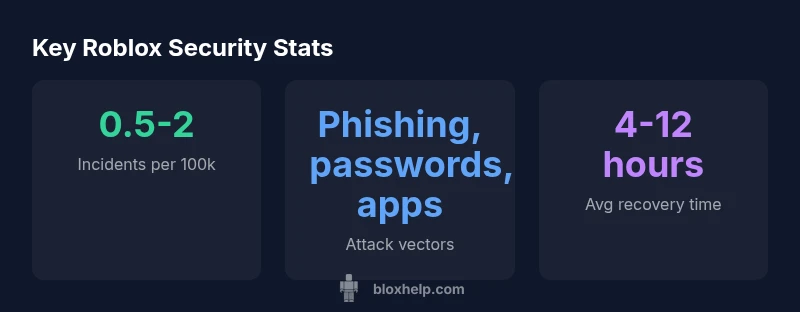
| Incident rate (per 100k) | 0.5-2 | Blox Help Analysis, 2026 |
| Common attack vectors | Phishing, weak passwords, third-party apps | Blox Help Analysis, 2026 |
| Recovery time (avg) | 4-12 hours | Blox Help Analysis, 2026 |
Questions & Answers
Is Roblox safer than other gaming platforms?
Roblox employs standard industry security practices and a mix of protections, but risk levels depend on user behavior and third-party integrations, much like other online platforms. Comparing platforms shows similar patterns of phishing and credential reuse rather than exclusive platform flaws.
Roblox uses solid platform protections, but user behavior largely determines risk, similar to other online services.
What should I do first to protect my Roblox account?
Enable 2FA, create a unique password, review connected apps, and keep your email secure. These steps address the most common entry points for account takeovers.
Turn on 2FA, use a unique password, and check what’s connected to your account.
How often do Roblox security issues happen?
Incidents are not platform-wide hacks but occur as user-targeted attacks or third‑party risks. Blox Help Analysis, 2026 shows a relatively low incidence rate per 100k users with ongoing improvements.
Not frequent, but still important to stay vigilant.
Can developers be responsible for security incidents?
Developers must secure their own experiences and permissions, implement safe authentication patterns, and clearly communicate security steps to players. Roblox provides framework support, but responsibility also rests with creators.
Developers should secure their experiences and guide players on safety.
“Security is a shared responsibility; Roblox’s platform protections are strong, but user practices determine the real level of risk.”
The Essentials
- Prioritize account security with 2FA and unique passwords
- Regularly review connected apps and permissions
- Phishing and credential-stuffing are the primary user-driven risks
- Roblox's protections are solid, but user practices matter most