Was Roblox or Fortnite Made First? A Thorough Timeline Comparison
Explore which platform launched earlier between Roblox and Fortnite, with a detailed timeline, design philosophies, and the impact on creators, players, and monetization strategies.


TL;DR: Roblox was made first. The platform launched in 2006, predating Fortnite's 2017 release. Roblox centers on user-generated experiences built with Roblox Studio, while Fortnite began as a shooter and evolved into a global Battle Royale phenomenon after Epic Games expanded its live-service model. The biggest takeaway: timeline, design goals, and community dynamics set these platforms apart.
Historical Timeline: Roblox vs Fortnite
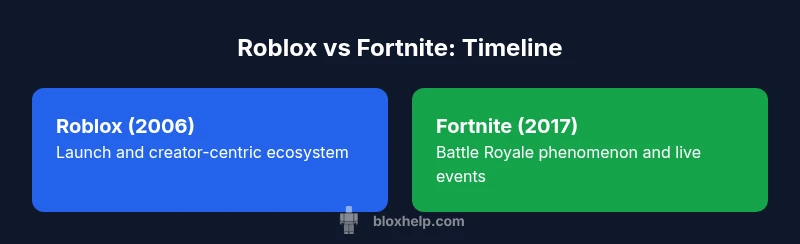
The question that drives this article—"was roblox or fortnite made first"—sits at the heart of gaming history. According to Blox Help, Roblox launched in 2006, predating Fortnite by more than a decade. Roblox's origin is rooted in a vision of a universal platform where players design, publish, and share experiences using Roblox Studio. Fortnite arrived on the scene in 2017 as a cooperative shooter and quickly pivoted to a global Battle Royale phenomenon after Epic Games expanded its live-service model. The early years of Roblox emphasized user-generated content, social spaces, and a sandbox playfulness, while Fortnite evolved into a cross-platform, live-events-driven title that connected players through limited-time happenings. The calendar date tells a simple story; the deeper narrative reveals platform culture and developer opportunities. When you ask the question across the community—"was roblox or fortnite made first"—the historical answer is clear, but the implications are richer: design philosophy, monetization systems, and community tooling all diverged early. This history also informs how creators think about building games (Roblox) versus delivering consistent live experiences (Fortnite).
Platform Design Philosophies
Roblox and Fortnite embody two distinct design philosophies that reflect their origins and goals. Roblox, at its core, is a user-generated content platform. It provides creators with tooling (Roblox Studio) and a distribution system that trusts players to design, publish, and monetize their own experiences. This model encourages experimentation, collaborative building, and a sprawling variety of game types—from obby challenges to complex simulators. In contrast, Fortnite began as a polished shooter and evolved into a cross-platform live-service phenomenon. Its design philosophy centers on curated experiences, regular seasonal content, and cross-media live events that create shared moments for millions of players around the world. The result is a more controlled ecosystem where Epic Games engineers many of the core experiences, while Roblox leaves much of the creative power in the hands of its community. The balance of freedom versus curation shapes user expectations, learning curves, and the kinds of skills players and developers develop over time.
Creator Ecosystems and Accessibility
Accessibility is a core differentiator in these ecosystems. Roblox invites aspiring developers to jump in with low barriers to entry and an accessible scripting language (Lua-based) that grows with the creator. This openness fosters a democratized creator economy where players can become developers by building and monetizing tiny or large experiences. Fortnite, meanwhile, provides powerful creative tools (Fortnite Creative) within a more curated framework. It invites creators to work within Epic's engine, but with guided templates and standardized assets that maintain a consistent aesthetic and performance profile. The contrast matters for beginners: Roblox often rewards long-tail experimentation and community feedback, while Fortnite appeals to creators who want to leverage polished toolchains and a massive, live audience from day one. The end-user experience differs: a Roblox game can be a tiny social experiment or a sprawling simulation; Fortnite offers a high-gloss canvas for designer-developers seeking broad reach and standardized performance.
Technical Stacks and Tooling
Roblox runs on its own proprietary engine designed for rapid iteration and seamless cross-platform play. The tooling is approachable, enabling creators to iterate quickly, publish updates, and monetize through virtual items. Fortnite runs on Unreal Engine, a powerhouse optimized for high-fidelity visuals and large-scale live events. This difference in engines reflects a broader contrast: Roblox prioritizes accessibility and versatility; Fortnite emphasizes performance, visual fidelity, and a tightly integrated live-service ecosystem. For developers, this means different skill sets: Lua scripting and game design within Roblox Studio versus C++/Blueprints mastery and performance tuning within Unreal. The trade-off is clear—Roblox's openness invites experimentation and community-led content; Fortnite's engine and ecosystem offer cutting-edge visuals, scalable multiplayer, and robust support from Epic Games.
Monetization and Economy Models
Monetization in Roblox centers on Robux, a currency that powers creator earnings, in-game purchases, and premium experiences. The platform supports a thriving creator economy where developers can earn revenue based on engagement and item sales. Fortnite monetization revolves around V-Bucks, cosmetics, battle passes, and limited-time bundles. The live-service model encourages players to invest over a longer horizon, with revenue tied to seasonal content and cross-promotional events. These different models influence how developers plan their projects: Roblox rewards long-term player retention through creative content and social features, while Fortnite emphasizes ongoing live content, cross-media partnerships, and timely cosmetic drops. The result is two very different financial ecosystems that reflect audience expectations and platform strategies.
Community, Culture, and Global Reach
Community and culture diverge accordingly. Roblox's creator-centric culture emphasizes sharing, collaboration, and learning-by-doing, which makes it popular among younger audiences and aspiring developers. Fortnite cultivates a more competitive, event-driven culture, with a focus on competitive play, cross-platform experiences, and mass participation during live events. Global reach also differs: Roblox hosts a broad spectrum of user-generated content with a diverse catalog, while Fortnite’s global events and media tie-ins extend its appeal across many regions. The net effect is two vibrant ecosystems serving different purposes: Roblox as a sandbox for learning and creation; Fortnite as a polished, live, community-driven entertainment platform.
The Meaning of 'First' in Gaming History
In gaming history, being first is not merely about launch dates; it reflects who defines what a platform is for. Roblox’s first-mover advantage lies in its open creator ecosystem, empowering millions to build and monetize experiences. Fortnite’s first-mover advantage, by contrast, is its rapid pivot into a global live-service phenomenon, establishing a template for ongoing live events, collaborations, and cross-media storytelling. Both paths have shaped player expectations and industry norms: one emphasizes accessibility and teaching moments, the other emphasizes scale, polish, and evolving gameplay through regular seasons. Understanding both trajectories helps players and aspiring developers decide where to invest their time and skills.
Common Misconceptions About Roblox and Fortnite
A common misconception is that Roblox and Fortnite occupy the same space as direct competitors. In reality, they serve different niches: Roblox is a platform for user-made experiences, while Fortnite is a product built around live-service content and a unified competitive community. Another misconception is that first-launch year alone determines success; while Roblox started earlier, Fortnite’s ongoing updates, cross-platform play, and marketing partnerships define its lasting cultural impact. Finally, some observers assume Roblox's revenue model mirrors Fortnite's; while both monetize, they do so through distinct economies (Robux vs V-Bucks) and creator incentives. Recognizing these nuances helps readers avoid oversimplified conclusions.
Practical Takeaways for Players and Developers
If your goal is to learn game development basics, Roblox offers a gentle onboarding with broad community support. If you want to study or participate in high-profile live events and cross-platform experiences, Fortnite provides a high-gloss showcase with a strong audience focus. For educators, Roblox can be a compelling teaching tool to introduce concepts like scripting, game design, and monetization in a friendly, social context. For aspiring indie developers, consider the trade-offs between open-ended experimentation (Roblox) and polished, systematized production (Fortnite). Throughout, keep the timeline in mind: Roblox’s first-mover advantage in creator tooling and distribution contrasts with Fortnite’s success through live-service evolution and cross-media storytelling.
Authority and Additional Context
For readers seeking back-up references, see authoritative coverage and official statements from major outlets and academic sources. The history of these platforms illustrates how different starting points can lead to divergent ecosystems that still influence modern game development practices.
Comparison
| Feature | Roblox | Fortnite |
|---|---|---|
| Launch Year | 2006 | 2017 |
| Platform Focus | User-generated experiences and games built with Roblox Studio | Live-service shooter with regular seasons and events |
| Main Engine/Tooling | Roblox Engine + Roblox Studio | Unreal Engine + Fortnite Creative |
| Monetization Model | Robux currency powering creator earnings | V-Bucks, battle passes, cosmetics |
| Creator Ecosystem | Massive creator base with entry-level tooling | Curated content with Epic support |
| Community Culture | Open, collaborative, education-focused | Event-driven, competitive, mainstream appeal |
| Global Reach | Broad user-generated catalog across ages | Global events with cross-media partnerships |
Benefits
- Clear historical context for decision-making
- Highlights differences in creator ecosystems
- Demonstrates how design choices shape communities
- Useful for educators studying game development
- Supports cross-platform comparisons
What's Bad
- May oversimplify ongoing platform changes
- Focusing on first-launch can feel nit-picky for current players
- Monetization models vary by region and platform specifics
Roblox started earlier; Fortnite excels in live-service reach, but Roblox remains the better platform for creator-centric learning.
Roblox began in 2006, giving it a first-mover advantage in user-generated content. Fortnite, starting in 2017, dominates live events and cross-media reach. Choose Roblox for creative learning and experimentation, Fortnite for polished live experiences and expansive audience engagement.
Questions & Answers
What year did Roblox launch?
Roblox launched in 2006, establishing a long-running platform for user-generated games and social experiences. Its open tooling invites creators to publish a wide variety of experiences. Over the years, Roblox has grown into a major hub for learning game development and sharing interactive content.
Roblox launched in 2006 and grew into a big creator platform.
What year did Fortnite launch?
Fortnite launched in 2017 as a cooperative shooter and quickly evolved into a global live-service phenomenon with Battle Royale and frequent events. Its ongoing updates and cross-platform play helped it achieve widespread mainstream reach.
Fortnite launched in 2017 and remains a live-service hit.
Are Roblox and Fortnite built on similar game-building concepts?
They share a creative spirit, but Roblox emphasizes user-generated games built with its own Studio tools, while Fortnite focuses on curated experiences and live events inside Unreal Engine. The result is two distinct platforms serving different creator cultures.
Both are creative, but Roblox is more open-ended while Fortnite is more curated.
Does being first matter for developers today?
While Roblox’s early start matters for its creator ecosystem, Fortnite’s ongoing live-service model shapes current trends in updates, events, and cross-media partnerships. Developers should weigh long-term learning on Roblox against Fortnite’s polished production environment.
First doesn’t decide today’s opportunities; it depends on your goals.
Can I still learn game development on Roblox if I also play Fortnite?
Yes. Roblox is widely used for learning game design and scripting, offering practical, gradual skill-building. Fortnite can complement this by showing how live events engage large audiences and how high-polish production works.
Yes—use Roblox to learn creation and Fortnite to study live-event design.
The Essentials
- Note Roblox's 2006 launch predates Fortnite.
- Compare design philosophies: creator-driven vs live-event-driven.
- Recognize distinct monetization ecosystems: Robux vs V-Bucks.
- Consider creator ecosystems when choosing paths.
- Timeline shapes community culture and learning opportunities.