Is Roblox Online? A Practical Guide to Connectivity and Troubleshooting
Is Roblox online? Learn how to verify connectivity, diagnose outages, and optimize latency for smooth Roblox gameplay with practical steps from Blox Help.


Roblox is an online platform; you must be connected to the internet to launch games, load your avatar, and access your friends' activities. Even when you play solo, the game communicates with Roblox servers for authentication and data syncing. There is no official offline mode. If you lose connectivity, you won’t be able to join games until you reconnect.
Understanding Roblox Online: Core Connectivity Concepts
Is Roblox online? The short answer is yes—Roblox operates as a cloud-backed online platform that relies on persistent server connections to authenticate players, sync your avatar, and manage in-game economies and social features. When you press Play, your device negotiates with Roblox servers to establish a session, validate your account, and download the necessary game assets in real time. This means that even if you are playing a solo experience, you are effectively part of a larger online ecosystem. Factors like your internet speed, Wi‑Fi stability, router quality, and even regional server load can influence how smoothly you experience the platform. In practice, you’ll want a stable connection, a compatible device, and a current Roblox client to minimize lag, login delays, and in-game rubber-banding. According to Blox Help, most online play issues originate from local network problems rather than core Roblox outages, but outages do occur and can affect players across large regions. Keeping your home network healthy is your first line of defense in making sure is roblox online translates to reliable gameplay.
For beginners, it helps to remember the two layers of connectivity: user authentication and game data streaming. Authentication ensures you can sign in and access your items, while streaming pulls in levels, assets, and real-time world state. The distinction matters because some problems look like gameplay lag but originate from failed sign-in or token refresh cycles that occur in the background. If you can sign in consistently but experience frequent in-game hiccups, you’re more likely dealing with data streaming or network reliability rather than login issues. In short, maintaining a stable internet connection is essential for is roblox online experiences to work as intended, and the better your network, the smoother the connection is across Roblox titles and experiences.
Top Features to Consider
When evaluating how robust an online Roblox experience will be, focus on latency, packet loss, and uptime. Latency measures how long it takes for data to travel between your device and Roblox servers. Lower latency generally means faster actions and more responsive gameplay. Packet loss occurs when some data packets fail to reach their destination; even small amounts can cause rubber-banding or teleportation artifacts in fast-paced games. Uptime reflects how often the Roblox service is available in your region. A high-uptime service reduces the risk of unexpected disconnects. Practical tips include selecting a server region closest to you (where possible within the game’s options), using a wired Ethernet connection for desktops, and keeping your router firmware up to date. For mobile players, ensure your device isn’t dropping to cellular data mid-session and that any background apps aren’t consuming excessive bandwidth. Finally, keep the Roblox client updated to minimize compatibility issues and take advantage of performance optimizations introduced in newer releases.
How Roblox Performs Online: Servers, Latency, and Data Sync
Roblox uses distributed servers to host games and process user actions in near real-time. When you join a game, your client exchanges position updates, input commands, and game state information with servers. These exchanges must be fast and reliable to prevent lag, desync, or rubber-banding. The data syncing process also handles inventory, avatar customization, and in-game purchases, all of which require secure, authenticated connections. Latency isn’t uniform—the closer you are to a Roblox server region, the lower your ping tends to be. Network congestion, in-game routing, and the number of concurrent players can influence latency. Additionally, streaming assets—textures, models, and audio—happen on the fly as you load a new experience, which means even a good connection can experience brief spikes during loading screens. Understanding these components helps players troubleshoot is roblox online issues more effectively and guides optimizations like better router placement or selective server-region changes when the game permits.
Common Scenarios When You Lose Connection
Disconnections can happen for several reasons: a weak home network, router misconfiguration, ISP instability, or Roblox-specific outages. Common symptoms include a frozen screen, a sudden drop in frames per second, or a forced sign-out with a message about server status. If you notice all apps struggling on your device, the issue is more likely local. If only Roblox is affected, the problem could be Roblox-side or a server region issue. To differentiate, check other online services, run a quick speed test, and try a different device on the same network. In many cases, a temporary outage is reported by Roblox's status pages or social channels. Having a plan for these moments—such as a reliable wired connection or a tested backup hotspot—reduces downtime and keeps is roblox online experiences uninterrupted as much as possible.
Troubleshooting Steps: Getting Back Online Quickly
A practical, step-by-step troubleshooting flow helps you regain is roblox online access fast. First, confirm your general internet connection by loading a web page or running a speed test. If your ISP is stable, test Roblox by switching to a different server region if the option exists in-game. Next, try a wired Ethernet connection instead of Wi-Fi, and consider repositioning or upgrading your router for better signal strength. Update your network drivers and firmware, and flush DNS settings if you suspect caching issues. If the problem persists, temporarily disable VPNs or firewalls that could be blocking Roblox traffic. Finally, reinstall the Roblox client if corruption is suspected. By following these steps, you’ll quickly isolate whether the issue is local or broader, and you’ll be better prepared to maintain is roblox online play when networks fluctuate.
In labs and real-world scenarios, the best outcomes come from a combination of hardware improvements, optimized software settings, and a predictable home network. Blox Help emphasizes the value of routine maintenance—checking cables, keeping firmware current, and avoiding crowded Wi-Fi channels—to sustain reliable Roblox online sessions.
How to Diagnose Online vs Local Issues
To determine whether you are dealing with an online connectivity problem or a local device issue, perform a simple, repeatable test sequence. Start with a speed test and ping measurement from the same device and network you use for Roblox. If the speed is consistently lower than your plan or latency spikes at random times, your network is the likely culprit. Then attempt to play on a different router or a wired connection to see if performance improves. If other online services show similar delays, the fault is likely external—either your ISP or a Roblox server issue. In contrast, if only Roblox performs poorly while other apps run smoothly, focus on Roblox-specific settings, such as server region, port forwarding, VPN usage, and local firewall rules. Keeping a log of incidents and timestamps can help you identify patterns and provide better information to support teams when you report issues.
For beginners, the bottom line is this: is roblox online struggles typically stem from your local network, not from Roblox servers by default. By following a clear, repeatable diagnostic protocol, you can quickly identify root causes and restore stable online play.
Best Practices for Reliable Roblox Online Play
Reliability comes from a holistic approach. Start with your physical network: place your router centrally, reduce interference from neighboring networks, and use wired connections when possible. Regularly reboot your router and modem to clear transient faults. Optimize device settings by closing bandwidth-heavy apps, updating drivers, and keeping your system free of malware that could throttle performance. On the software side, ensure your Roblox client is up to date and verify that you aren’t using a VPN or firewall rule that blocks Roblox traffic. Consider enabling two-factor authentication to secure your account against credential theft, which can disrupt login flow. Finally, you can minimize dramatic latency changes by enabling Quality of Service (QoS) on your router for gaming traffic and choosing server regions that are geographically closer to you. These practices reduce the chance of unexpected disconnects and improve the overall reliability of is roblox online sessions.
Security and Privacy Considerations When Playing Online
Online play introduces privacy considerations and potential security risks. Only log in on official Roblox sites or apps, enable two-factor authentication, and beware phishing attempts that mimic Roblox login prompts. Never share your password or security codes with others. Use strong, unique passwords and review account activity periodically for unfamiliar sessions. Parental controls are important for younger players, enabling you to manage who can contact your child and what content is accessible. As an online platform, Roblox also collects data for game personalization and safety moderation; understanding these practices helps players navigate the service responsibly while preserving a fun experience. The goal is to enjoy is roblox online gameplay without compromising your digital security or privacy.
Connectivity overview for Roblox online play
| Connection Area | What It Means | Typical Latency (ms) |
|---|---|---|
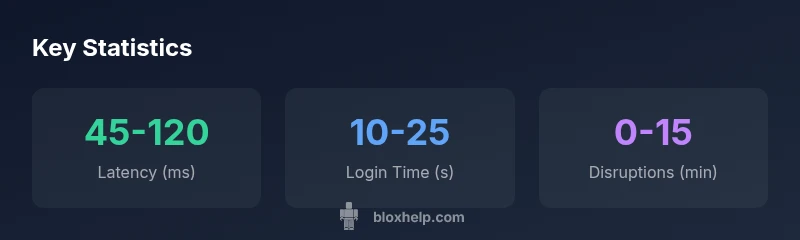
| Online Gameplay | Active connection to Roblox servers for real-time play | 45-120 |
| Login/Authentication | Server verification during sign-in and data sync | 50-150 |
| Asset Streaming | Downloading game assets as you load experiences | 100-250 |
Questions & Answers
What counts as an online Roblox connection?
A connection that can reach Roblox servers to authenticate your account, load assets, and synchronize game state. Even single-player experiences rely on server communication for data and integrity.
Online Roblox means your device talks to Roblox servers for authentication and game data; if you’re disconnected, you can’t play until you reconnect.
Why does Roblox sometimes lag even with a fast internet plan?
Lag can stem from local network congestion, router quality, or server-side load. Always test latency, try a closer server region, and ensure no background apps are stealing bandwidth.
Lag can be from your network, not just your plan. Check latency and local usage first.
How can I test if the issue is on Roblox’s end?
Check Roblox status pages or official social channels during suspected outages. Compare with activity on other services to confirm if the problem is platform-wide.
Look for Roblox status updates and check other apps to see if the issue is global.
What are quick fixes to regain online play?
Restart your network gear, switch to a wired connection if possible, update drivers, flush DNS, and test different server regions. If needed, reinstall the Roblox client.
Restart gear, try wired, update drivers, and consider a fresh Roblox install.
Should I use a VPN for Roblox connectivity?
VPNs can complicate routing and increase latency; use them only if you have a specific need and understand the potential impact on is roblox online performance.
Assuming no special need, avoid VPNs as they can slow things down.
“Connectivity is the backbone of Roblox gameplay. A stable, low-latency connection reduces lag and improves responsiveness across titles.”
The Essentials
- Verify a stable internet connection before playing
- Lower latency improves responsiveness and reduces lag
- Use wired connections or optimize Wi-Fi for Roblox sessions
- Keep Roblox client and device software up to date